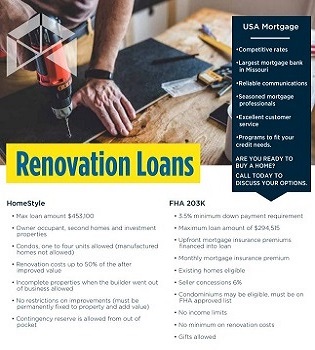
Most homeowners think they need a massive construction loan or a complex equity line to fix a leaking roof or remodel a kitchen, but they’re usually wrong. Financing a home upgrade in Missouri is less about convincing a bank of your architectural vision and more about choosing the right type of debt to carry.
For most people looking to upgrade, the simplest answer is a personal loan. These are unsecured, which means you aren’t putting your house on the line as collateral. You might pay a slightly higher interest rate for that peace of mind, but it prevents a bad renovation from turning into a foreclosure nightmare. You can find these offers without ever leaving your couch by using online comparison tools.
If you need cash fast for a new deck or a bathroom vanity, an unsecured personal loan is the standard. You get a lump sum, pay it back in monthly installments, and the bank doesn’t get a say in whether you buy granite countertops or high-end hardwood flooring.
The Unsecured vs. Secured Divide in the Show Me State
Homeowners in Missouri generally fall into two camps: those who want speed and those who want the lowest possible rate. In 2026, Missouri Lend and other providers see a massive split in how people approach debt. Data suggests that about 75% of Missouri homeowners prefer unsecured personal loans because they’re easy to apply for and the money arrives quickly. Speed often beats the absolute lowest interest rate when a contractor needs a deposit by Friday.
Secured loans, like a Home Equity Loan or a HELOC, are the other side of the coin. These use your home as collateral, so the rates often look much more attractive on paper. There is a catch, though, that many people overlook when they’re excited about a new kitchen. If you can’t meet your monthly payments on a secured loan, the lender can eventually foreclose on your home. It’s a high-stakes gamble for a medium-stakes renovation.
Personal loans offer a middle ground. You aren’t risking the roof over your head, which provides a safety net that secured loans lack. This lack of collateral is exactly why the interest rates are higher, but for many, that extra 2% or 3% is a small price to pay to sleep at night without worrying about a single missed payment triggering a legal battle over their property.
Consider the difference in risk profiles:
- Unsecured Personal Loans: No collateral required; faster approval; higher interest rates; no risk to home equity.
- Home Equity Loans: Requires equity; lower interest rates; slower approval; home is at risk if you default.
- HELOCs: Revolving credit line; variable rates; tied to home value; high flexibility for ongoing projects.
When you weigh these options, you’re essentially trading interest expense for risk management. If you’re fixing a foundation, you might want the lower rates of a secured loan. If you’re just updating the look of the place, the personal loan is usually the smarter, safer move.
Navigating the Missouri Lending Environment
Missouri is an interesting place for borrowers because the state doesn’t have a usury cap for licensed consumer lenders. This might sound intimidating, but it actually makes the market quite competitive. Since lenders aren’t restricted by a hard ceiling on interest rates, they have to compete on speed, ease of use, and customer service to win you over. That competition is a win for the consumer.
You can find a wide variety of offers by looking at different sectors of the market. Some people go to a local credit union, while others prefer the massive online players that use algorithms to approve loans in minutes. Don’t take the first offer you see. Because there’s no cap on rates, the difference between a “good” rate and a “predatory” rate can be substantial depending on your credit score.
Credit scores act as the primary gatekeeper. A person with a 740 score might find themselves looking at a completely different set of lenders than someone sitting at 620. This is why comparison is so vital. You might use a service like Acorn Finance to see personalized offers up to $100,000 without hitting your credit score with a hard inquiry. It’s a way to shop around without the traditional penalty of “window shopping” for debt.
Here is a quick breakdown of how credit scores typically influence your Missouri loan options:
| Credit Tier | Typical Loan Type | Ease of Approval |
|---|---|---|
| 740+ (Excellent) | Low-interest Unsecured or Secured | Very High |
| 670 – 739 (Good) | Standard Personal Loans | High |
| 580 – 669 (Fair) | High-interest Unsecured | Moderate |
| Below 580 (Poor) | Limited Options/High Interest | Low |
The Logistics of Getting the Cash
The mechanics of a home improvement loan have changed a lot over the last decade. It used to involve a mountain of paperwork, a visit to a branch in a strip mall, and a week of waiting for an underwriter to look at your tax returns. Now, much of this happens in your browser. You can line up offers from big online players and compare them side-by-side while sitting in your living room. This digital shift makes the process much more efficient for people with busy schedules.
Most personal loans are disbursed as a single lump sum. This is a major advantage for people managing a renovation. You receive the full amount, you pay your contractor, and you are done with the debt cycle for that specific project. There is no need to “ask permission” from a bank to buy an extra gallon of paint or a new light fixture; the money is yours to use as you see fit once it hits your account.
This flexibility is why personal loans are the dominant choice for Missourians. If you realize halfway through a kitchen remodel that you actually want to upgrade the flooring instead of the backsplash, a personal loan doesn’t care. A home equity line might have more restrictions or require a new draw on the line, but the personal loan is an open checkbook for your home improvement needs.
However, the lump sum approach requires some discipline. Since you get the money all at once, there’s a temptation to use a portion of it for something unrelated, like a vacation or a new car. If you take out $25,000 for a basement finish and spend $5,000 on a high-end espresso machine, you’re still paying interest on that $5,000 for years. It’s a simple rule, but many borrowers ignore it.
Comparing the True Cost of Capital
When you look at the numbers, the “cheapest” loan is rarely the “best” loan. A loan with a 6% interest rate sounds amazing, but if the closing costs are $3,000 and it takes six weeks to get the money, you might lose more in contractor price hikes or stress than you save in interest. On the other hand, a loan with a 12% rate that you can access in 24 hours might be the better choice if it prevents your contractor from walking off the job because you couldn’t pay the initial deposit.
You should also consider your debt-to-income ratio. Adding a new monthly payment to your budget is a permanent change to your financial profile. Even if the loan is unsecured and your house is safe, that monthly obligation counts against you if you decide to try to buy a new car or a second property in a year or two. It’s a piece of your future flexibility that you’re trading for current home value.
Many people forget to factor in the cost of their time. If you spend three weeks chasing the absolute lowest interest rate by visiting five different local banks, you’ve spent dozens of hours on a task that a single online comparison could have solved in fifteen minutes. Sometimes, the most expensive thing you can do is waste time trying to save a few dollars on interest.
Before you sign anything, verify these three things:
- The APR, not just the interest rate: The APR includes the fees and gives you the real cost of the money.
- The repayment term: A longer term means lower monthly payments but a much higher total interest cost.
- The prepayment penalty: Ensure you can pay the loan off early without being charged a fee for being responsible.
One common objection is that personal loans are too expensive compared to the equity you have sitting in your house. While the rate is higher, the lack of risk to your primary asset is a massive psychological and financial advantage that most people undervalue until they face a financial hiccup.